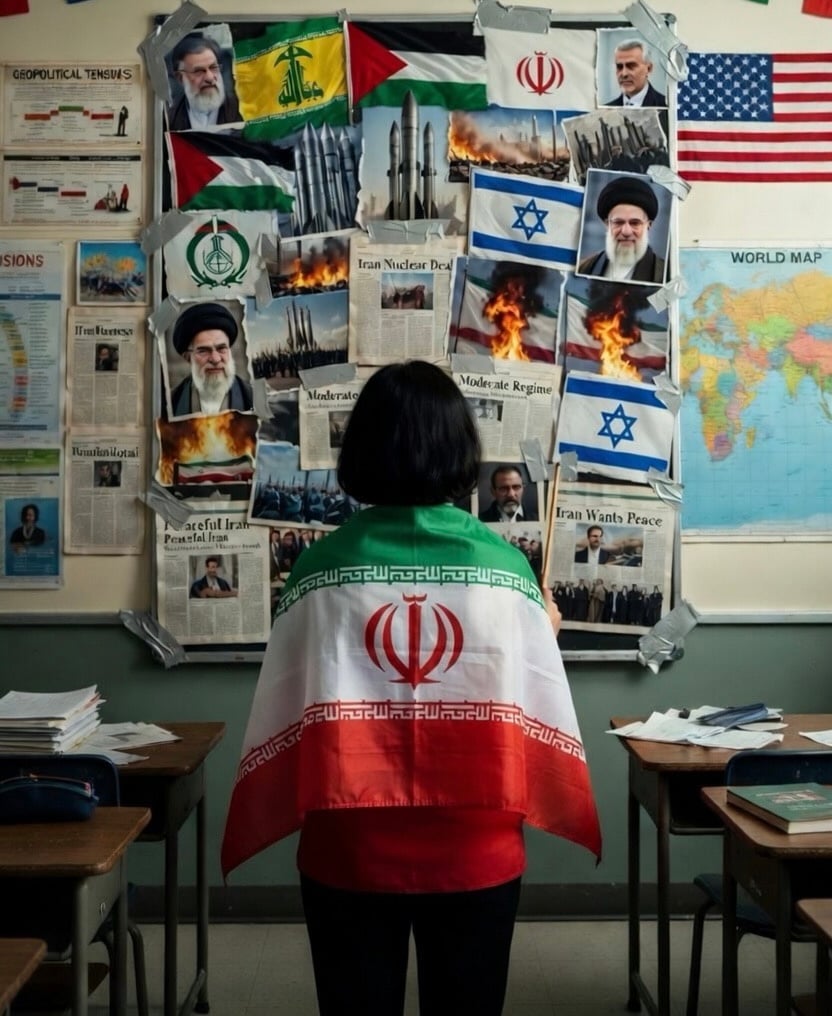
Within a day of the United States launching an attack on Iran—the world’s leading state sponsor of terrorism—activist groups with distinctly anti-American leanings began circulating classroom materials for teachers and students across the country. These resources framed the U.S. action in the harshest possible terms while omitting crucial context to advance a political narrative.
Educators already have a well-established library of sources for current event materials to choose from to cover this particular topic. As schools increasingly emphasize the discussion of politically charged and internationally sensitive issues, such resources have become more visible—and more in demand. Among them, radical activist educators eagerly embrace topics that can be cast as anti-American or critical of President Trump. The supposedly “reliable” materials they turn to tend to reflect those biases. In the case of Iran, these activists received exactly what they sought: a framework that paints the United States as an unprovoked aggressor and Iran as a blameless victim.
PBS Newshour, a highly esteemed resource for teaching current events, immediately had a lesson plan prepared on Iran. On March 1, they published What we know about the U.S.-Israel attacks on Iran, an article with a video that highlighted the input from Nick Schifrin, PBS News’ Foreign Affairs and Defense Correspondent.
When asked “How did this conflict between the U.S., Israel, and Iran actually start? How did we get to this point?” Schifrin responded, “With an unprecedented decision by President Trump to launch a joint U.S.-Israeli war to collapse the Iranian State, that’s really how this started.”
“So this was not the limited strike that was considered by the president or his aides, nor was this even limited to Iran’s nuclear or missile program. This is a war to overthrow the Iranian regime and not quick,” Schifrin continued. “But even some regional officials who were skeptical of this war before the war started, telling me tonight that now that the US and Israel have started it, they need to see it through.”
The implications of these statements are clear. Viewing the video, students are immediately presented with the narrative that the United States had no legitimate reason to attack Iran and that the Trump administration’s sole motivation was for control.
Another resource omits such a substantial amount of information about Iran that readers may be left questioning both the author’s understanding and the reliability of the work itself. Still, like the PBS Newshour lesson, it was suggested as a usable resource from Education Week, which was promoted by the National Council for the Social Studies (NCSS).
In an article published on the Council on Foreign Relations (CFR) Education Blog, Global Matters, the author frames the piece as one that will help readers “think critically about Iran,” as suggested by its title, The Background Students Need to Think Critically About Iran. However, the article provides little substantive background on Iran itself. Instead, it focuses largely on the United States, emphasizing U.S. sanctions on Iran while downplaying the threats posed by Iran’s nuclear program. Notably, the source also omits a comprehensive discussion of Iran’s involvement in terrorism as its largest state sponsor.
Following the article’s claims that the United States has a history of influencing who holds power in Iran—and its sympathetic portrayal of Iran as “one of the most heavily sanctioned countries,” which the author says has left it “largely segregated from global markets”—comes the discussion of Iran’s nuclear ambitions.
On the topic of Iran’s nuclear weapons program, the article states, “Since 2002, many countries have believed that Iran intended to build a nuclear weapon. After years of negotiations, a nuclear agreement with Iran was reached in 2015. This agreement was known as the Joint Comprehensive Plan of Action (JCPOA). Iran agreed to limit its nuclear program and subject its nuclear facilities to much stricter monitoring. In exchange, the United States and others relaxed sanctions on Iran’s economy. But just three years later, President Donald Trump announced the U.S. withdrawal from the deal.”
This brief paragraph implies that President Trump abruptly decided to withdraw from the deal without justification. The following section offers a bit more context, suggesting that the Biden administration bears no responsibility due to its “focus on the war in Ukraine.” The source then returns to faulting President Trump, claiming he struck Iran for no apparent reason even after “talks resumed.”
The text states, “The Biden administration held negotiations to revive the JCPOA, but ultimately failed to make progress, partly due to the shift in foreign policy focus to the war in Ukraine. All the while, there were signs that Iran was continuing to develop its uranium-enrichment capabilities. When President Trump returned to office in 2025, talks resumed only to be followed two months later by a U.S. military strike on a major nuclear site in Iran.”
“Nuclear negotiations resumed in early February in Oman but appeared to stall several weeks later,” the article continues. “While the status of Iran’s uranium enrichment capabilities and weapons program remains unclear, one of several stated goals of the assault on February 28th was to eliminate Iran’s nuclear and missile programs.”
Both the PBS Newshour lesson and the CFR Education Blog fail as trustworthy classroom sources because they prioritize ideological framing over factual balance. PBS Newshour presents the U.S. as an aggressor acting without justification, omitting the decades of Iranian-sponsored terrorism, regional destabilization, and nuclear provocations that formed the backdrop of the conflict. Similarly, the CFR piece claims to promote critical thinking but instead minimizes Iran’s role as the world’s leading state sponsor of terrorism while portraying U.S. policy as impulsive and vindictive. Both sources strip away necessary context, skewing historical understanding to fit a partisan narrative rather than encouraging students to evaluate evidence fairly. In doing so, they model bias rather than balance—a failure that makes them unfit for serious educational use.
To effectively safeguard classrooms from such biased or inappropriate materials, teachers bear the primary responsibility for rigorously evaluating and selecting educational resources. This duty underscores the critical need for educators committed to genuine impartiality and ideological balance. By upholding principled neutrality, teachers empower students to think critically, weigh evidence from multiple perspectives, and form their own well-informed opinions—free from indoctrination or partisan influence.
Such an environment is best fostered by professionals who approach teaching as a commitment to intellectual honesty and student autonomy, rather than as an opportunity for ideological advocacy. Educators who prioritize balanced inquiry over activism help cultivate informed, respectful citizens who value their nation’s history, founding principles, and republican traditions without fostering division or alienation.
For educators addressing the topic of Iran, the resources below offer valuable material. While some may require minor revisions or clarifying notes, these sources are particularly effective for examining Iran’s role as the world’s leading state sponsor of terrorism, its record of nuclear deception, and its failure to engage in good-faith negotiations.
Suggested resources for teachers to use:
- Global Conflict Tracker: Iran’s War WIth Israel and the United States
- FDD: Iran-Backed Iraqi Militias Step Up Attacks on U.S. Military Presence in Middle East
- FDD: Iran-backed Shiite militias attack US forces based in Iraq
- FDD: Iran-backed militias attack 3 US bases in Syria
- U.S. State Department: Terrorist Designations of Iran-Aligned Militia Groups