According to a recent Gallup poll, Americans continue to view capitalism more favorably than socialism, but support for capitalism has slipped to 54%, down from 60% in 2021. In contrast, views of socialism have been more stable, with 57% holding a negative opinion and 39% a positive one. This year, however, Democrats and independents show less favorable opinions of capitalism, with both groups dropping eight percentage points compared with 2021. For the first time, fewer than half of Democrats (42%) have a positive view of capitalism. Before this year, Americans’ opinions of capitalism remained fairly consistent, but the current 54% who view it positively represent the lowest level Gallup has recorded thus far.
Since 2016, a larger share of Democrats have expressed favorable opinions of socialism compared to capitalism, and that gap continues to grow today. This rise in Democrats’ positive views of socialism coincides with prominent Democratic figures such as Senator Bernie Sanders, Representative Alexandria Ocasio-Cortez, and New York City mayor-elect Zohran Mamdani openly identifying as Democratic socialists.
The past few months have alarmed many Americans who fear that our constitutional republic is under threat from those who undervalue the principles of “life, liberty, and property,” or “the pursuit of happiness.” Increasingly, national rhetoric reflects sharp criticism of capitalism—a trend that research shows often begins in the classroom. In one of our earliest articles, we examined several influential education leaders who have made it their mission to undermine capitalism and equip K-12 teachers with tools to do the same in their classrooms.
While some teachers disparage capitalism, others avoid teaching it altogether, leaving its definition to be shaped by those who oppose it. Failure to teach the basic tenets of capitalism—such as private property, the profit motive, and the “invisible hand”— from its own “father” rather than its biggest critics risks priming students to dismiss capitalism altogether and embrace socialism uncritically. Having no formal knowledge of how each system works nor their real consequences, makes the indoctrination all the more easy.
The “utopian” model of socialism is often readily embraced by young people who have yet to face the system’s harsh economic realities and therefore lack a clear understanding of socialism’s practical implications. Without exposure to real-world examples, these students may not fully grasp the potential consequences of endorsing socialist ideas.
The argument for socialism, on its surface without real-world examples, is significantly easier for students to make than the argument for capitalism. Teachers ask students questions along the lines of what it means to be “fair,” oftentimes manipulating students to spout socialist rhetoric. However, freedom-minded educators can equip their students to make a strong case for capitalism by using simple and relatable analogies, to achieve balance. Comparisons to classroom experiences—such as group projects or grading systems—are particularly effective in helping students grasp some of the basic principles of capitalism.
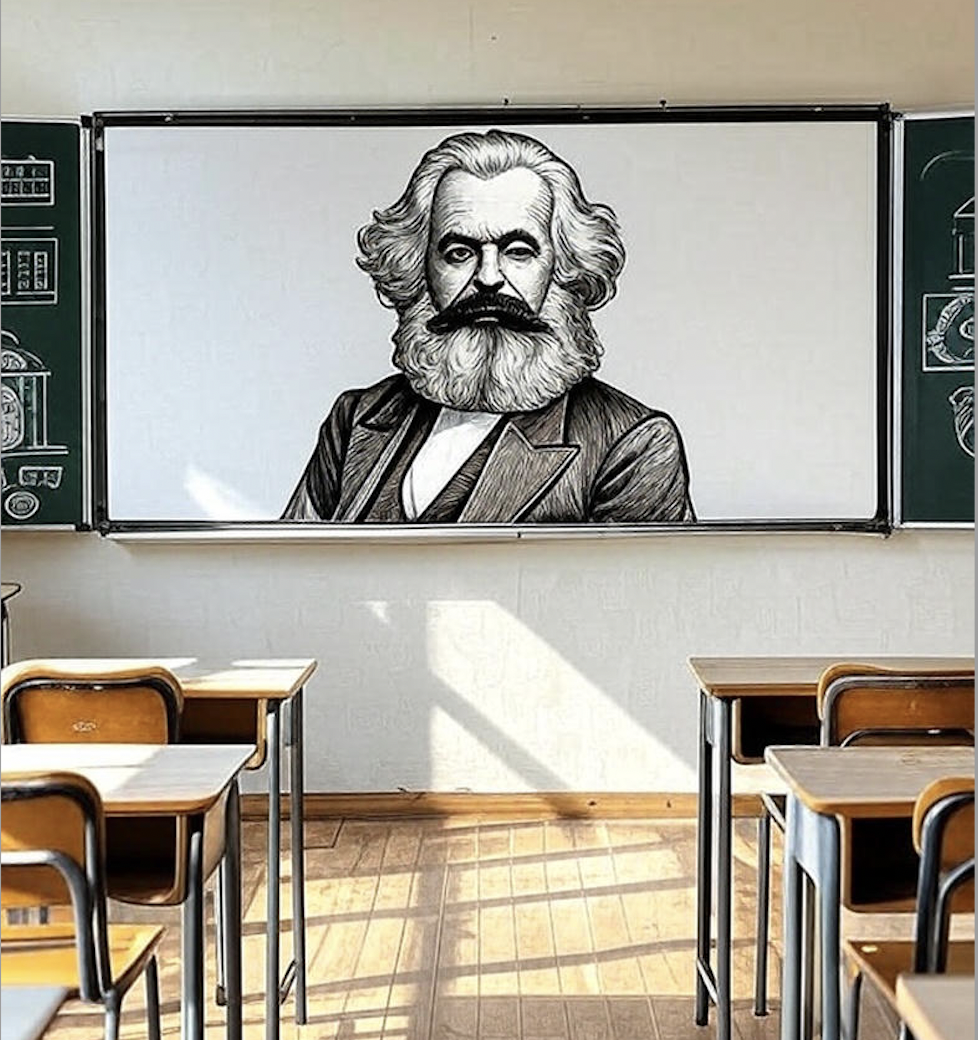
Lessons on capitalism can be especially troubling, and in some ways even more concerning than lessons on communism. Surprisingly, research suggests that some teachers present capitalism primarily through the lens of Karl Marx, the “father of communism,” rather than through its own foundations. For example, in a Learning For Justice learning plan, students are asked: “Was Karl Marx correct about the nature of capitalism?”
While this may be a compelling question, the resources provided in the plan omit any writings about capitalism from thinkers who actually defined it—such as Adam Smith’s The Wealth of Nations. If students are expected to evaluate whether Marx was correct, they should study how capitalism has been explained and defended by its leading architects. While teachers may choose to bring in additional materials, a balanced plan must present capitalism on its own terms, free from hostility, so that students can form a more informed and fair evaluation.
It is important to emphasize that students should not be indoctrinated as capitalists, nor as socialists. Instead, they should be encouraged to study the foundational principles of capitalism directly from Adam Smith, evaluating his ideals in his own words to judge for themselves how the system works and whether it is viable. Unfortunately, many educators present capitalism either through their own interpretations or, in some cases, even through the lens of its chief critic, Karl Marx, rather than through its founder or like-minded thinkers. As a result, it is not uncommon to find young people who recognize the name Karl Marx but have never heard of Adam Smith.
As a result of these challenges, we designed a lesson that introduces the complex ideas of capitalism in a way that is accessible to students encountering the content for the first time. By focusing on six basic tenets, the lesson provides a clear and realistic entry point, giving students the opportunity to build a solid foundation of knowledge of the system. While capitalism can be explored from many angles, economics itself is often difficult for young learners, making simplicity essential for comprehension. For students still unfamiliar with economic vocabulary—and still financially dependent—the subject can feel abstract and overwhelming. This initial introduction offers them manageable access to the core ideas, while leaving room to revisit capitalism later with greater depth and complexity as their understanding of economics grows.
Everyone should recognize that teachers are not simply storytellers or entertainers; they are professionals who understand how the human mind processes, stores, and applies knowledge. Within the classroom, teachers hold more influence than many people realize. They choose the texts, frame the questions, shape the discussions, and ultimately help guide students’ thinking. Their power does not always operate openly. A teacher does not need to explicitly endorse an ideology, such as socialism, in order to influence students; often, subtle choices made during instruction—especially within student-centered learning—can steer perspectives in less visible ways.
Student-centered learning undoubtedly has strengths: it encourages curiosity, independence, and the discovery of personal values. Yet its success depends heavily on the teacher. If a teacher allows personal bias to shape the materials and questions presented, students may only experience the illusion of independent thought. True student-centered learning requires deliberate restraint, ensuring that students gain the opportunity to question, debate, and form ideas free from hidden influence. To clarify, student-centered learning gives students the best chance to discover their own ideas and values, but it is only with a teacher willing to put aside their own bias that this will be accomplished.
Additionally, with capitalism increasingly criticized by politically motivated radical leftist educators, socialism can be unintentionally promoted by those who lack knowledge or genuine interest in the subject. Many teachers are simply trying to do their jobs well, impress their administrators, and create engaging, dynamic lessons for their students. Ironically, these well-intentioned but unaware educators are often the most vulnerable to recruitment into the radical left’s causes.
Being aware of anti-capitalist rhetoric or any message that could be promoting socialism is one way in which conservative and moderate teachers can begin to turn the wheels moving towards socialism back in their own classrooms. This rhetoric or messaging can appear in lesson plans including different texts, questions, and activities. It can appear on tests or vocabulary sheets. It can appear in media shown to students including videos or artwork. Teachers must carefully review everything given to their students and make adjustments accordingly.
The key to stopping the spread of socialism lies in educating young people about its harsh realities. Unfortunately, many classrooms today are influenced by activist educators or by those who fail to recognize when America’s founding principles are undermined in the curriculum or by colleagues. The answer is not counter-indoctrination, but the presence of thoughtful conservative and moderate teachers and administrators who can draw on their understanding of both capitalism and socialism to deflect attempts to persuade students towards becoming socialists. If the struggle with socialism and communism is to be overcome, freedom-loving individuals must engage in the field of education, where the critical battle of ideas unfolds.